Last updated: November 19, 2026
Quick Answer: Additional insured status works only when the contract, endorsement, and policy wording match; a certificate alone does not create coverage. In this guide to How Additional Insured Status Works in Vendor and Landlord Contracts, the key issue is whether the policy actually has the right endorsement.
Additional insured status is the contract tool that lets a vendor or tenant shift some third-party liability exposure to another party’s general liability policy, but only if the policy actually has the right endorsement and the wording matches the contract. A certificate of insurance by itself does not create that status.
This guide is for business owners, tenants, and vendors who are reading lease language, vendor agreements, or a landlord’s insurance requirements and need to understand what the paper is really asking for. It assumes you already have a general liability policy in place or are reviewing one, and that you can read basic contract terms. This is information, not financial advice; a qualified adviser should be consulted for your own situation.
Key takeaways
- Additional insured status is created by policy language, usually an endorsement, not by a certificate alone.
- Vendor contracts and landlord leases often ask for different versions of the same protection, so the exact wording matters.
- A certificate of insurance can show a promise to carry coverage, but it is not the coverage itself.
- The contract, the endorsement, and the policy wording must line up, or the request may be unenforceable or incomplete.
- The biggest mistake is treating “additional insured” as a box to check instead of a coverage grant with limits and conditions; consult a qualified insurance professional.
What additional insured status actually does in a contract
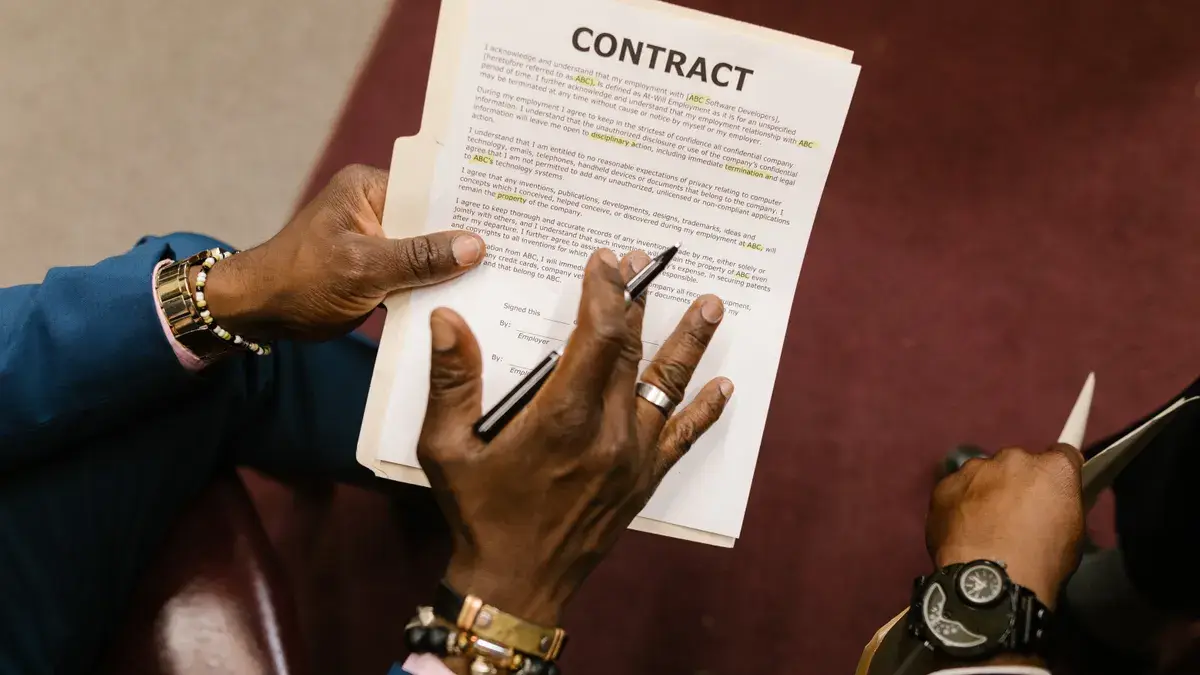
Additional insured status gives one party coverage under another party’s general liability policy for certain claims tied to the named insured’s work, products, or operations. In plain terms, a landlord or vendor wants protection if your business causes a covered third-party loss and the contract says you must extend that protection.
The key point is that the contract does not itself add coverage. The contract asks for it, but the policy has to respond through an additional insured endorsement. That endorsement is the policy document that expands who is covered and for what kind of claims. If the policy does not include the endorsement, the promise in the contract may be unfulfilled even if the certificate looks perfect.
This comes up most often in two settings. A vendor agreement may require a supplier, installer, or contractor to name the customer as an additional insured for operations arising out of the vendor’s work. A landlord lease may require a tenant to name the landlord and sometimes the property manager or mortgagee as additional insureds for premises-related liability.
The wording matters because different forms provide different scope. Some endorsements are tied to ongoing operations. Others focus on completed work. Some limit coverage to liability “caused, in whole or in part,” by the named insured’s acts or omissions. That phrase is not decorative; it affects whether the endorsement responds to a claim. The exact form number on the endorsement, such as an ISO form, is often the first place a reviewer looks. For background on additional insured wording, see ISO commercial general liability form materials and the IRMI overview of additional insured coverage.
A generic article often gets this wrong by treating additional insured status like a certificate issue, so it is worth checking the policy language with a qualified insurance professional. It is really a policy-and-contract matching issue. The contract asks for it, the endorsement grants it, and the certificate only reports what should already exist.
How a vendor or landlord request gets translated into coverage
The request works only when the contract language, the endorsement, and the certificate of insurance all point in the same direction. That means the reader should check the actual policy wording, not just the compliance packet.
Start with the contract. Look for the exact party that must be named, the type of claim covered, and whether the request applies to ongoing operations, completed operations, or both. In a vendor contract, the trigger might be “arising out of” the vendor’s work. In a landlord lease, the trigger is often tenant occupancy, use of the premises, or tenant-caused operations. Those phrases are not interchangeable.
Then compare that request to the endorsement attached to the general liability policy. The endorsement should identify the additional insured category and the scope of coverage. If the contract asks for “primary and noncontributory” wording, that is a separate allocation issue and usually needs a separate endorsement or manuscript wording. If the contract requires completed operations but the endorsement only covers ongoing operations, the gap is real.
A certificate of insurance is the last piece, not the first. It should list the named insured, policy number, carrier, effective dates, and any additional insured notation if the form allows it. But the certificate is only evidence of what the policy says. It is not a substitute for the endorsement itself, and certificate wording does not override the policy. See the ACORD certificate form guidance and the insurer’s policy forms for the controlling language.
For a practical review, use a simple sequence: contract first, endorsement second, certificate third. That order keeps the reader from relying on a compliance document that may be incomplete. The hub on commercial liability insurance contract requirements goes deeper on contract language itself, but this page is about how additional insured status functions once those requirements appear.
How do vendor contracts and landlord leases differ?
Vendor contracts usually tie additional insured status to the vendor’s work, while landlord leases tie it to occupancy and property use. That difference changes who should be named and what kind of endorsement is needed.
A vendor agreement often wants the customer, project owner, or upstream contractor named as an additional insured because the customer fears liability from the vendor’s operations. A landlord lease usually names the landlord, property owner, managing agent, and sometimes affiliated entities because the tenant’s presence on the premises creates the risk. The same phrase—“additional insured”—can mean different things depending on whether the work is off-site, on-site, or tied to a fixed location.
The timing also differs. Vendor contracts may want coverage for the period of work plus completed operations for a specified tail period under the policy form, while leases usually expect the coverage to stay in force for the entire occupancy term. If the tenant vacates or the vendor’s work ends, the additional insured requirement often ends too unless the contract says otherwise.
Another difference is how broad the request should be. A landlord may ask for “all successors and assigns” or a property manager. A vendor customer may ask for specific project participants. Those are not just naming conventions; they can change whether the endorsement form can accommodate the request. Standard ISO additional insured endorsements often work better with direct, clearly identified parties than with open-ended catchall language.
This is where a generic checklist fails. A lease requirement copied into a vendor contract, or a vendor form copied into a lease, can produce a mismatch the carrier will not cure. The question is not only “Is someone an additional insured?” but “Under which party’s operations, on which form, and for how long?”
How to review the policy wording without getting lost
The policy wording answers whether the additional insured promise is actually inside the general liability policy and how far it reaches. That means reading the endorsement, the declarations page, and any conditions that limit or expand coverage.
Begin with the endorsement title and form number. Many additional insured grants are specific forms attached to the commercial general liability policy. The form itself usually states who qualifies, which liability is covered, and whether the coverage is primary, excess, or subject to other insurance. If the form says “only with respect to liability for which the named insured is liable,” that is narrower than a broad contractual promise.
Next, check for the scope of operations. Some forms cover only ongoing operations. Others extend to completed operations, which matters when the work is finished but a claim shows up later. A lease may not need completed operations wording, but a contractor supplying a landlord renovation often does. The wrong form can leave a hole even when the contract was drafted carefully.
Also check the policy’s exclusions and limits. Additional insured coverage usually rides on the same liability limits as the named insured unless the policy or endorsement says otherwise. It may also be affected by exclusions for professional services, pollution, mold, or employment-related claims. A landlord or vendor may ask for broad coverage, but the policy may still exclude the exact type of loss the contract had in mind.
If the certificate references additional insured status but you cannot locate the endorsement, stop there. That is not a paperwork issue to “fix later.” Ask for the endorsement schedule or the policy itself. A certificate without the endorsement is only a clue.
What the certificate of insurance can—and cannot—prove
A certificate of insurance can show that a policy exists and may note additional insured status, but it cannot create coverage. That is the single most common misunderstanding in vendor and landlord paperwork.
The certificate usually lists the insured, the insurer, policy dates, and sometimes boxes or remarks indicating additional insured, waiver of subrogation, or primary and noncontributory status. It is useful as a snapshot. It is not the source of rights. If the policy has expired, the endorsement was never added, or the wording is narrower than the contract, the certificate does not cure that problem; consult a qualified insurance professional if the dates or wording do not line up.
This is why many landlords and vendors ask for two things: a certificate and a copy of the endorsement. The certificate helps with administrative tracking; the endorsement proves the policy extension. If a broker sends only a certificate, the receiving party may think it has protection when it does not.
A certificate can also be misleading when it uses broad remarks that do not match the policy wording. The standard ACORD certificate form, for example, is widely used in the market, but even a familiar form does not override the policy. The insurer, not the certificate template, controls the actual grant of coverage. For a primary source, review the ACORD form and the insurer-issued endorsement itself.
The practical rule is simple: if the certificate says additional insured, confirm the endorsement. If the endorsement says something narrower than the contract, the contract still needs attention. If the certificate and endorsement both exist but the policy dates do not cover the relevant period, the timing still fails.
What usually goes wrong in vendor and landlord deals
The biggest mistakes are predictable, and each one has a cost.
-
The contract asks for one thing and the endorsement gives another.
A lease may require completed operations, but the policy only covers ongoing operations. The consequence is a gap after work ends. The fix is to match the requested language to the actual endorsement form before signing. -
The certificate is treated like proof of coverage.
A certificate can be issued without the underlying endorsement being correct. The consequence is false comfort. The fix is to ask for the endorsement or policy wording, not just the certificate. -
The wrong entity is named.
A landlord may want the property owner, not just the building manager. A vendor contract may want the customer’s parent company, which the policy may not support. The consequence is a naming mismatch that can make the request ineffective. The fix is to use the exact legal names in the contract and endorsement request. -
The parties assume all general liability policies are interchangeable.
They are not. Policy forms, endorsements, and exclusions differ. The consequence is relying on language the carrier does not recognize. The fix is to review the actual form, not a generic summary. -
The parties ignore primary and noncontributory wording.
A contract may ask whose policy pays first. The consequence is an indemnity fight after a loss. The fix is to check whether that wording is actually endorsed, not merely promised. -
The deal is signed before the coverage is confirmed.
Once the lease or vendor agreement is executed, the pressure to “make it work” rises. The consequence is last-minute scrambling and possible noncompliance. The fix is to review the requirement before execution, not after.
These are not academic defects. They are the issues that turn a neat compliance file into a real dispute when a claim appears.
When the standard approach does not apply
Additional insured status is not the right answer in every contract, and some situations need a different structure. If the risk is not tied to third-party bodily injury or property damage under a general liability policy, additional insured wording may not solve the problem.
The contract demands professional services protection: That usually means the issue belongs in errors and omissions or professional liability coverage, not a standard general liability endorsement. Get qualified advice on the policy class and wording.
The contract requires employee injury protection: Additional insured status under general liability usually does not replace workers’ compensation or employers liability requirements. Check the separate policy type.
The landlord wants protection for building ownership claims unrelated to tenant operations: A tenant’s additional insured status may be too narrow for that risk. Review whether the lease is asking for something the policy cannot grant.
The vendor arrangement involves completed work with a long tail: The standard ongoing-operations form may be inadequate. Verify whether completed operations are included and for how long under the carrier’s wording.
The request names a broad list of affiliated entities or future successors: Standard forms often do not fit open-ended wording cleanly. The contract should be tightened or the coverage request should be reworked.
If any of those situations appears, the answer is not always to force an additional insured clause into place and hope for the best. The right move is to align the contract with the actual coverage available, because a polished clause does not expand a policy by itself.
How to get the wording lined up before you sign
The cleanest result is a contract that asks for exactly what the policy can deliver. That means reviewing the clause before execution and asking for the endorsement language in the same round of review.
First, pull the contract clause that names the additional insured requirement. Identify the exact person or entity to be named, the trigger event, and whether the clause asks for ongoing operations, completed operations, primary and noncontributory wording, or waiver of subrogation. If a term is missing, do not assume it is implied.
Second, compare that clause to the endorsement on the general liability policy. Look for the exact form title and the insured category. If the endorsement is one of the standard ISO forms, check whether it matches the kind of relationship in the contract. If it is manuscript wording, read it line by line.
Third, check the certificate of insurance as a summary document only. It should be consistent with the endorsement and policy dates. If the certificate mentions an additional insured but the endorsement is unavailable, the file is not complete enough to rely on.
Fourth, resolve naming issues before final signature. Use legal entity names, not trade names, and make sure the landlord, vendor, manager, or project owner is named the way the contract requires. If the request is too broad for the policy, narrow the clause rather than pretending the policy will stretch.
Fifth, keep the paper trail together. Save the contract, certificate, endorsement, and any written clarification in one place. If a claim comes up later, the order of those documents matters. The contract shows the promise, the endorsement shows the coverage, and the certificate shows what was issued.
Drafted with AI; not yet reviewed by a person.