

Last updated: November 05, 2026
Key Takeaways
- These requirements show what coverage a business must prove for its operations.
- Most requirements come from contracts; legal ones are usually narrower and local.
- The stricter the public contact and property exposure, the more detailed the requirement.
- Read the controlling document first, then match the policy line by line.
Commercial General Liability Insurance Requirements by Business Type are usually a mix of law, lease terms, client contracts, and licensing rules—not one universal rule. This guide explains how those requirements change by business type, what landlords and clients commonly ask for, and how to tell a legal requirement from a contract requirement. Commercial General Liability Insurance Requirements by Business Type can vary by city, state, province, and municipality. This article is information, not financial advice.
What commercial general liability requirements actually cover

Commercial general liability insurance requirements are the conditions a business must meet to show it has enough liability coverage for the way it operates. In plain terms, the policy is there to respond to claims involving bodily injury, property damage, and some personal and advertising injury claims that arise from business operations.
That definition matters because many readers assume there is one fixed rule. There usually is not. A city may require proof of insurance for a business license, a landlord may require a certificate of insurance before handing over keys, and a client may require specific wording in a service contract. Those are different triggers, even if they all point to commercial general liability insurance.
The practical question is not “Do I have to buy this?” but “Who is asking, what exactly are they asking for, and what kind of business activity creates the exposure?” A retail shop with customer foot traffic, a caterer handling events, and a consulting firm working from a home office face different risk profiles and different contract demands. A business license office may care about one thing; a venue or property manager may care about another.
The terms also vary by country, state, province, and municipality. Limits, exclusions, and filing requirements change often, so any rule of thumb should be checked against the actual lease, bid package, permit application, or client agreement. For background on how the coverage itself works, the hub page on commercial general liability insurance is the right place to start. The U.S. Small Business Administration also explains small-business insurance basics at SBA.gov. The IRMI glossary is another useful reference for insurance terms.
A helpful way to think about it: legal requirement, landlord requirement, client contract requirement, and industry expectation are related, but they are not interchangeable. Mixing them up can leave a business underinsured for a signed contract even if it technically satisfies a license rule.
Who usually needs it, and who may not
Commercial general liability insurance requirements matter most for businesses that interact with the public, enter someone else’s property, or sign service agreements with insurance clauses. That includes many storefronts, mobile service businesses, event vendors, and companies that work on leased premises. It also matters for businesses that want to bid on jobs, open vendor accounts, or satisfy lease obligations without delays.
A solo consultant with no public-facing location may still be asked for it, but the pressure is usually contractual rather than statutory. A home-based designer, for example, may not face a general license rule in many places, yet a commercial landlord or a corporate client can still demand proof of coverage before signing. That is why the same policy can be optional in one setting and effectively mandatory in another.
The opposite case matters too. A reader with no customers, no employees on-site, and no lease might assume the policy is irrelevant. That can be true for some low-interaction businesses, but it is a narrow case. The moment the business hosts visitors, hires helpers, rents equipment, or enters another party’s space, the need changes fast. A claim tied to a slip, a dropped object, or a damaged surface can arise from ordinary operations, not just dramatic accidents.
This is not a page for deciding whether a business “should” carry liability coverage in the abstract. It is for understanding where requirements come from and why they differ. If a business is already in a regulated or contract-heavy setting, a written proof request is a realistic possibility. In those cases, a certificate of insurance is often the first document requested.
The businesses that should slow down and check the paperwork first are those with mixed operations: retail plus events, services plus installations, or e-commerce plus warehouse handling. In those cases, one policy form does not automatically satisfy every relationship, and the wording in a lease or client agreement controls more than the owner’s assumption.
Which requirements come from law, and which come from contracts?
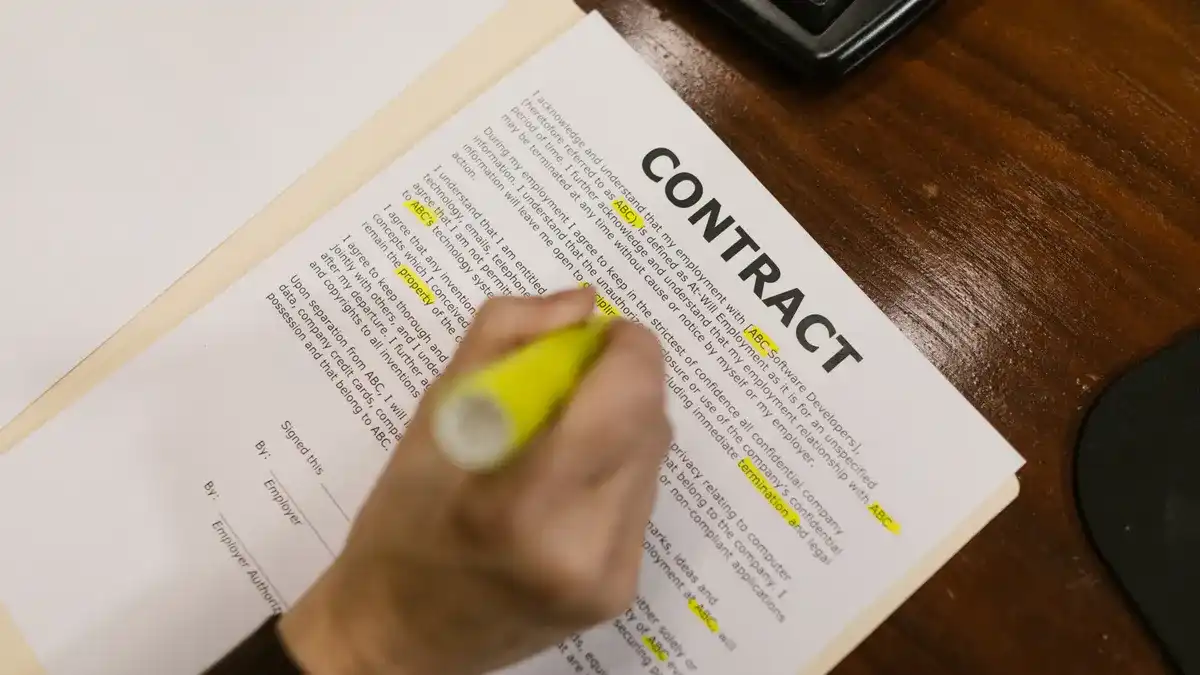
Most commercial general liability insurance requirements come from contracts, while legal requirements are usually narrower and location-specific. A law may require proof for a license, permit, or regulated activity, but many of the strictest demands come from landlords, clients, and vendors.
That distinction is easy to miss because the paperwork looks similar. A lease can require the tenant to carry liability coverage and name the landlord as additional insured, which means the landlord is added to the policy for certain claims. A client contract can require a minimum limit, a waiver of subrogation, or primary and noncontributory wording. Those are contractual terms, not blanket legal rules.
A business license requirement is different again. Some jurisdictions ask for proof of insurance before issuing a permit or license, especially for activities that involve public premises, food service, vehicles, events, or work in public spaces. The license office does not usually care whether the policy is generous; it cares whether the applicant meets the listed requirement. The exact form may be called a certificate of insurance, but the underlying obligation is the rule in the license application.
Landlords are one of the most common sources of commercial general liability insurance requirements because they want to control risk on their property. The lease may require a minimum limit, but the important point is that the lease language controls the tenant’s obligation. If the lease says coverage is required by the time the tenant takes possession, waiting until opening week is too late.
Clients are the other big source. A client may be less concerned with the law than with transfer of risk: who pays if a worker breaks a display case, dents flooring, or injures a visitor. That is why a service agreement can demand specific language that goes beyond the policy’s basic existence. The business may technically be insured and still fail to satisfy the contract.
A useful source for general small-business coverage concepts is the U.S. Small Business Administration, and insurance-language definitions are also explained by professional bodies such as the International Risk Management Institute (IRMI). Those are reference points, not substitutes for reading the actual lease or contract.
What different business types are usually asked to provide
The stricter the public interaction and the higher the property exposure, the more detailed the requirement tends to be. A storefront, event vendor, restaurant, and contractor all tend to face different wording because the underlying risk is different.
Retail and hospitality businesses are often asked to show commercial general liability insurance because clients are on-site and property damage is easy to imagine. The requirement may come from a landlord, a commercial lease, or a permit process. The practical issue is not only having coverage, but matching the documentation to the premises and the business name used on the lease.
Food businesses and caterers often see stronger requirements because events, venues, and temporary setups create many points of contact. A venue may require proof before allowing access, and a client may require the policy to be active for the entire event period. The timing matters as much as the limit.
Professional offices and consultants can be the most misleading category. A quiet office may seem low risk, but a client may still require coverage before allowing access to confidential spaces, co-working areas, or a client site. The policy request may come from the contract, not the profession itself.
Healthcare-adjacent, childcare, education, and personal services businesses often face layered requirements. A lease can impose one set of conditions, a license another, and a client or referral platform a third. In those settings, the business type matters less than the setting: private suite, shared building, mobile service, or on-site visit.
Manufacturing, warehousing, and distribution businesses can also face liability requirements tied to the premises rather than the product line. A landlord of an industrial space may want proof of coverage before move-in, and a shipping client may require insurance terms before goods are accepted on site. These businesses should read the lease and vendor agreement together, not separately.
The common thread is simple: the requirement follows the relationship. The more control the other party has over the space or job, the more likely the policy language will be specific.
How do you check the requirement before you sign?
The answer is to read the document that creates the obligation, then match the policy to it line by line. A lease, permit application, or client agreement is the controlling document; a verbal assurance is not.
- Obtain the exact document that creates the obligation, such as the lease, bid package, vendor agreement, or license application, and confirm it is the final version. Verify the named parties and effective date. A mismatch in entity name, like “ABC LLC” versus “ABC Corp.,” is a problem because the insurer may issue the wrong certificate.
- Find the insurance section and identify every required element: limit, named insured, additional insured wording, primary and noncontributory language, waiver of subrogation, and notice terms. Verify each item is written, not implied. If the document only says “adequate insurance,” that is too vague to rely on.
- Check whether the requirement is a minimum per occurrence, an aggregate limit, or both. A per-occurrence limit applies to one claim; an aggregate limit is the cap for the policy period, often 12 months. If the contract does not specify, that omission is a red flag and should be clarified in writing.
- Confirm the policy period covers the entire required term, including setup, move-in, installation, or event dates. Verify the start date and expiration date. If the policy begins after possession or event day, the requirement is not met even if the application is already in process.
- Match the business description on the policy declarations page to the work actually being done. Verify that the operations description is not too narrow. A problem appears when a policy is written for office work only, but the business is also doing customer visits, deliveries, or on-site setup.
- Ask whether the landlord or client wants to be named as an additional insured, not merely listed as a certificate holder. Verify the exact legal name and mailing address. A certificate alone usually does not add rights under the policy; the endorsement language does. If the contract requires both, one document is not enough.
- Check for exclusions that cut against the business type, such as operations outside premises, subcontracted work, or event-specific activity. Verify that the excluded activity is not central to the contract. If the exclusion removes the very work being sold, the requirement is functionally unmet.
- Confirm the insurer or broker can issue the exact certificate wording on time, and keep a copy with the signed contract. Verify the document can be produced before move-in or service start. A last-minute scramble is a problem because some landlords and clients will not allow access without proof in hand.
This is the point where many businesses discover they have a paperwork problem, not a policy problem. The contract may ask for wording the current policy cannot support, or the policy may be fine but the business name is wrong. Either way, the fix starts with the paper trail.
When do commercial general liability requirements stop being a simple checklist?
Commercial general liability insurance requirements stop being a simple checklist when the business is in a lease-heavy, event-heavy, or contract-heavy setting and the other party’s wording is more demanding than the policy form. In those situations, standard assumptions stop working.
The lease names the landlord as additional insured and the policy cannot do that: the tenant may satisfy the premium payment but not the lease covenant — the lease needs review and the insurer may need to issue an endorsement.
The client wants primary and noncontributory wording: the client wants its coverage to sit behind the business policy — without the correct endorsement, the contract can still be breached.
The license office requires an active policy at issuance: the business cannot open legally until proof is filed — delay the opening date or obtain compliant proof before applying.
The business operates in more than one line of work: one description on the declarations page may not fit all operations — the policy needs to reflect the actual work, not a simplified label.
The business is moving into a shared building or event venue: building rules may be stricter than the law — follow the venue handbook and the lease, not just the state form.
The contract requires a specific limit but the policy is below it: the business may be under the contract minimum — renegotiate the clause or obtain a policy structure that meets the paper requirement.
These are not rare edge cases; they are where disputes happen. The consequence is usually practical rather than dramatic: delayed move-in, blocked access, rejected paperwork, or a contract default. When the wording is unclear, the right move is to get the contract clarified before work starts, not after a claim.
The mistakes people make with landlord and client requirements
The answer is that they treat every request as if it were the same, when the source of the request changes the fix. That confusion causes the most preventable problems.
One common mistake is assuming a certificate of insurance is the same thing as satisfying the contract. A certificate shows evidence; it does not automatically amend the policy. The consequence is that the landlord or client may reject the document, or worse, accept it while the underlying policy still does not match the clause. The correct alternative is to check whether an endorsement is required, and if the wording is unclear, confirm it with the landlord, client, or a qualified insurance professional.
Another mistake is reading only the minimum limit and ignoring the rest of the insurance clause. The consequence is a technically insured business that still misses waiver language or additional insured wording. The correct alternative is to review the entire section, not just the dollar amount, and to verify the wording against a reliable source such as the lease, the contract, or guidance from the SBA.
A third error is using a generic business description on the policy and assuming it fits every job. The consequence is a gap between the insured operations and the actual work. The correct alternative is to make sure the operations description matches the real business, especially if the business does events, mobile work, or site visits.
A fourth mistake is waiting until the day before opening, move-in, or event setup. The consequence is avoidable delay because endorsements and certificates often take time to issue. The correct alternative is to start the paperwork as soon as the lease or contract is in draft form.
A fifth mistake is assuming one state rule applies everywhere. The consequence is bad planning when a municipality, landlord, or client has a separate requirement. The correct alternative is to treat each relationship as its own checklist and confirm the jurisdiction with the document itself or a professional adviser.
The last mistake is skipping the comparison between the lease and the client agreement. A landlord may require one form of additional insured wording, while a client requires a different one, so the same policy package may not satisfy both. That is why the source of the requirement matters as much as the limit.
Drafted with AI; not yet reviewed by a person.


