
Last updated: October 30, 2026
Quick Answer: 2 documents usually decide the claim—policy language and endorsements. Policy language decides what is covered, what is excluded, and when a claim gets paid. Endorsements rewrite parts of that language, sometimes in a single sentence, sometimes across several pages, and they can change the result more than the main form does. If a policyholder only reads the declarations page, they miss the part that usually controls the loss.
This guide is for the person who needs to understand Policy Language and Endorsements: The Complete Guide before signing, renewing, filing a claim, or arguing over coverage. I write on insurance and contract language from the standpoint of plain-English interpretation, not sales copy, so I focus on what the words do and where they break down. In a typical policy package, 3 parts matter most: the declarations page, the base form, and the endorsements.
Key takeaways
- Policy language is the operating manual; endorsements are the add-ons that can override it.
- The declaration page tells you the basics, but the coverage answer usually lives in the insuring agreement, exclusions, and conditions.
- An endorsement can narrow coverage, broaden it, or replace an entire section.
- The same endorsement form number can matter more than the policy’s brand name.
- If an endorsement and the base form conflict, the endorsement usually controls.
- The safest reading is usually sentence-by-sentence, not “what the policy was supposed to mean.”
What policy language actually does
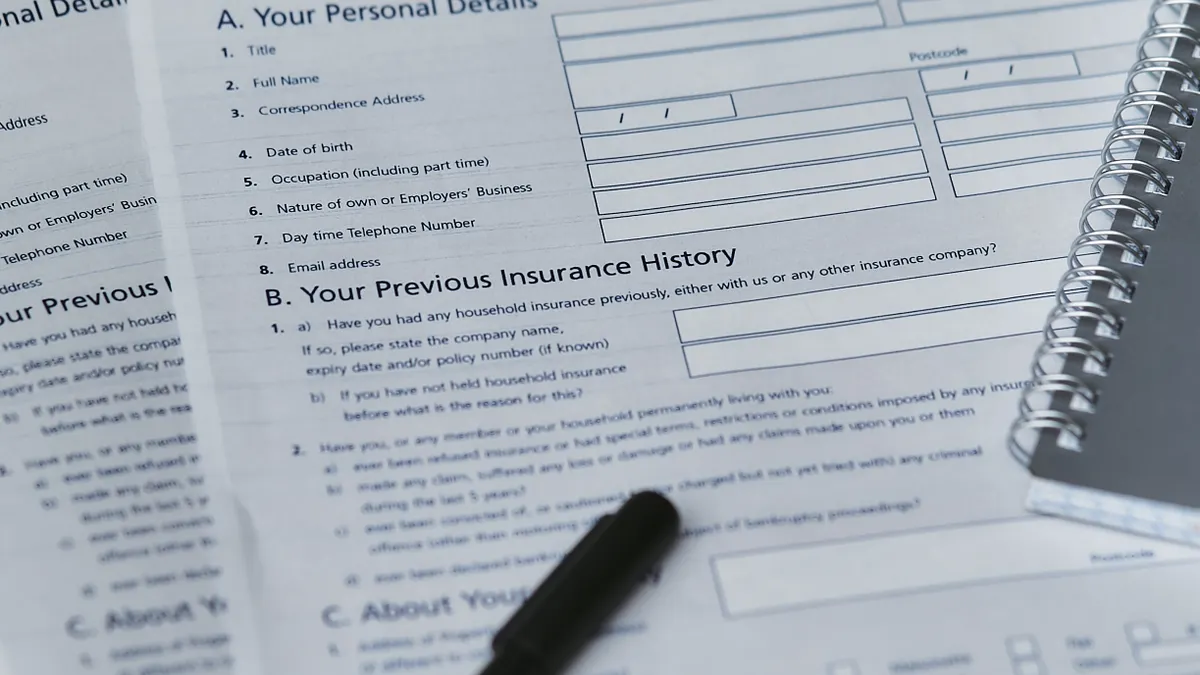
Policy language answers one question: under what facts does the insurer owe money, defense, or both?
That sounds simple until the wording starts stacking conditions. A typical commercial policy may include a declarations page, definitions, insuring agreement, exclusions, conditions, and endorsements. Those parts are not equal. The declarations page lists limits, named insureds, effective dates, deductibles, and forms. It rarely answers the coverage question by itself. The answer usually depends on whether a loss falls inside the insuring agreement and outside the exclusions.
This is where a lot of people go wrong. They treat policy language like a summary of the deal, but a broker, claims professional, or coverage lawyer should be consulted when the wording drives the result. It is a rulebook written to decide edge cases, and edge cases are where claims are won or lost. A phrase like “arising out of,” “caused by,” “related to,” or “in the care, custody, or control of” can do more work than a whole paragraph of marketing language. According to the International Risk Management Institute, small wording changes can change the scope of coverage, and those changes often matter most in disputed claims.
The policy form number matters too. A form labeled ISO CG 00 01, for example, is not a promise of uniform coverage in the abstract; it is a specific general liability form, and the version year matters because wording changes over time. The same is true in personal lines. Homeowners forms, auto forms, and umbrella forms all use common structures, but the exact wording controls. ISO publishes standardized form language, and those editions are revised over time.
A reader should read policy language in this order: declarations, definitions, insuring agreement, exclusions, conditions, then endorsements. That order helps because later sections often modify earlier ones. It also reveals the biggest trap: a sentence that looks broad in one section may be quietly narrowed later.
The practical rule is blunt. If the loss turns on one word, that word is the policy.
What is an endorsement in an insurance policy?
An endorsement is a written change to the policy that can add, remove, replace, or clarify coverage. It is not a note in the margin and not a sales flyer; it is part of the contract.
Endorsements come in several forms. Some are standardized forms used by carriers across many policies. Others are manuscript endorsements drafted for one insured, one account, or one risk. A rider is often used as a synonym, though the term can be looser in casual use and more specific in some jurisdictions or product lines. The important point is functional: an endorsement changes the policy text that came before it.
That change can be small or sweeping. A one-page endorsement might add an additional insured, schedule a piece of equipment, or delete coverage for a specific activity. A longer endorsement can replace exclusions, revise a deductible, or create its own conditions. A flood endorsement on a property policy, for example, may move you from no flood coverage at all to limited coverage with a separate deductible and different claims rules. A cyber endorsement on a general liability form may do the opposite: carve out data-related losses that the insured assumed were included.
The strongest endorsement is the one that says it amends another section “notwithstanding any other provision.” That phrase is a flashing warning light. It means the endorsement can override conflicting language elsewhere in the policy unless a court or statute says otherwise.
Endorsements are not automatically bad. Some are valuable because they fill gaps the base form leaves open. A valuable endorsement for one insured is a liability trap for another. A scheduled personal property endorsement can give better terms on jewelry, art, or instruments than the base homeowners form, but it may also require appraisals, itemized descriptions, or proof of ownership. Miss one condition and the promised protection can shrink fast.
The most common mistake is assuming every endorsement broadens coverage. It does not. Many endorsements are restrictions wearing polite clothes.
How endorsements change coverage in practice

An endorsement changes coverage in three main ways: it can add coverage, remove coverage, or redefine the rules that decide a claim.
An adding endorsement usually does one of two things. It either extends coverage to a risk the base policy excludes, or it enlarges a limit, category, or named person. A common example is an additional insured endorsement on a liability policy. That can give a landlord, contractor, or project owner some protection under the tenant’s or subcontractor’s policy, but usually only for liability arising out of the named insured’s operations and often only to the extent required by contract language.
A removing endorsement is where surprises happen. A policy may look broad until an endorsement deletes a class of losses. Water backup, business income from certain causes, roof restrictions, assault and battery, abuse and molestation, communicable disease, and many other topics have appeared in endorsements that narrow coverage. The loss is not uncovered because the insurer forgot it. It is uncovered because the policy was rewritten.
A redefining endorsement is subtler. It may keep the same headline coverage but shift the claim mechanics. That can mean a higher deductible, a separate sublimit, a different geographic territory, a claims-made trigger, or an exclusion for losses caused by subcontractors unless certain contracts are in place. The policy still exists, but it behaves differently.
This is why endorsements matter more than their length suggests. A one-line change to the definition of “occurrence,” “insured contract,” or “personal and advertising injury” can alter the entire claim path.
The reader should also watch for sequencing. If an endorsement says it applies “to all coverages” or “this endorsement modifies insurance provided under the following,” the effect can be broad. If it names only one coverage part, the rest may stay untouched. In disputes, that distinction matters.
A good habit is to compare the endorsement against the base form line by line. If the endorsement restates a sentence, the restated version probably replaces the original. If it merely references a section, that section may still control in gaps the endorsement does not cover.
The real difference between the declarations page and the endorsement
The declarations page states the deal; the endorsement changes the deal.
That is the simplest way to separate them, and it solves a lot of confusion. The declarations page lists the insured, policy period, forms attached, limits, deductibles, and sometimes the premium. It tells you what paper is in the file. It does not usually tell you how a disputed loss is decided. The endorsement is where the deal is often rewritten after the form is selected.
Here is the practical difference a reader needs. The declarations page answers “who, when, where, and how much.” The endorsement answers “under what altered terms.” If the declarations page says a building is insured for a certain limit but an endorsement excludes roof surface damage unless specific maintenance is documented, the limit on the declarations page does not save the claim.
The declarations page also creates false confidence because it looks complete. It is not. It may list form numbers such as HO 00 03, CP 00 10, or CG 00 01, but it does not recite all the wording in those forms. That is why a reader cannot stop there.
The endorsement is also more likely to be drafted for a specific account. That means it may use nonstandard wording that only appears on that policy. When that happens, the standard form becomes only the starting point. The special endorsement may change the actual bargain more than the base form does.
The mistake to avoid is treating the declarations page as the “summary” and the endorsement as a side note, but a broker or coverage professional should be consulted when the policy is being interpreted for a claim. In a claim, the reverse is often true. The endorsement is the part a claims professional reads first when something unusual happens. The National Association of Insurance Commissioners also notes that policyholders should review the full policy, not just the declarations page, because the form list and endorsements control the actual terms.
If the question is “what matters most for coverage?” the answer is the policy language that specifically changes the loss scenario. That is usually the endorsement, not the declarations page.
The honest side-by-side
The declarations page wins for speed, but the endorsement wins for truth.
| Criteria | Declarations Page | Endorsement | Winner for this condition |
|---|---|---|---|
| Shows named insured, limits, dates | Yes, usually in one place | Usually no | Declarations page when you need the basics fast |
| Changes coverage terms | No, except by listing attached forms | Yes, often directly | Endorsement when the loss turns on wording |
| Controls a conflict with base form | Rarely | Often yes, if it amends the form | Endorsement when the documents conflict |
| Shows sublimits or special deductibles | Sometimes | Often yes | Endorsement for special claim terms |
| Helps identify the policy version | Yes, through form numbers and edition dates | Yes, if the form number is listed | Either, for version checking |
| Explains exclusions in detail | No | Sometimes, if it adds or narrows exclusions | Endorsement for exclusion changes |
| Useful for a quick renewal review | Yes, very useful | Only if the form list changed | Declarations page for routine review |
| Useful for claim denial analysis | Limited value | High value | Endorsement for disputed claims |
| Risk of false reassurance | High | Lower, but still possible | Endorsement, though it can still mislead if read alone |
The table leads to a hard conclusion: the declarations page is administrative, while the endorsement is substantive. That does not make the declarations page useless. It makes it incomplete.
A reader should also know one limitation. A good declarations page can help spot a problem early, but it cannot resolve a coverage dispute by itself. If the attached forms list is outdated, incomplete, or inconsistent with the full policy, the page becomes a clue rather than an answer. For a major claim, that difference matters.
How to read policy language without getting trapped by the fine print
Read the policy in layers, and stop trusting headings.
That is often the safest way to avoid being fooled by formatting. Insurance contracts often use bold section titles that suggest clarity, while the actual rule sits in a definition buried three pages later. A term like “you” may be defined to include more than one entity. A term like “pollutant” may be defined broadly enough to capture a substance the insured did not think of as pollution. A term like “loss” may not mean what the ordinary reader expects.
Start with the declarations page to identify the exact forms attached. Then read the definitions section before reading the exclusions. That order helps prevent a common mistake: assuming a word means its everyday meaning when the policy has given it a technical one. Next, read the insuring agreement. Only then should the exclusions and conditions be checked. If the policy has endorsements, compare each one to the section it amends.
The phrase “subject to” is another signal. If a sentence begins “subject to the following,” the following text can limit the promise above it. If an endorsement says “this endorsement changes the policy as follows,” treat the listed changes as active, not decorative. The Insurance Information Institute explains that endorsements can modify or remove terms, which is why the precise wording matters.
Another useful habit is to mark three places for every disputed term: the first use, the definition, and any endorsement that repeats it. Many coverage fights come down to whether the same word means the same thing in every section. Often it does not.
Specificity matters more than confidence here. A policyholder who says “the policy covers property damage” may be right in the abstract and wrong in the actual claim. A policyholder who says “the endorsement deletes water damage except as shown in Section II” may sound cautious and be exactly right.
The honest downside of this method is time. It is slower than skimming and not as satisfying as a quick yes-or-no answer. But coverage disputes are not won by speed. They are won by the exact sentence that governs the loss.
When endorsements help, and when they hurt
Endorsements help when the base form leaves a real gap. They hurt when they quietly shift risk onto the insured.
That is the simplest rule. A homeowner may want a scheduled jewelry endorsement because the base policy sublimit for jewelry is often low relative to the item’s value. A contractor may want an endorsement that broadens additional insured status to match contract demands. A business may need an endorsement that adds hired and non-owned auto coverage if employees use personal vehicles for work. These are real uses, not theoretical ones.
The downside is just as real. An endorsement can make a policy look improved while adding conditions that are hard to satisfy. Scheduled equipment may need serial numbers and values. Additional insured status may apply only to ongoing operations, not completed work. A water-related endorsement may sound helpful while excluding seepage, repeated leakage, or maintenance failures. A cyber endorsement may come with a strict claims-made trigger that penalizes late notice.
This is why a reader should never ask only, “Does the endorsement add coverage?” The better question is, “What does the endorsement make me prove?” Proof burdens matter. If an endorsement requires a contract, a certificate, an appraisal, or a specific notice process, the added coverage can vanish when paperwork is thin. Coverage disputes often turn on whether the insured met those proof requirements.
A useful comparison is between broad wording and tight wording. Broad wording gives flexibility, but that flexibility can also invite dispute. Tight wording gives predictability, but it may be narrower than the insured expects. A manuscript endorsement written for one large account may look favorable on a sales sheet and still be poor for claims because it leaves only a sliver of the original grant intact.
Endorsements are worth paying attention to when the value at stake is larger than the premium change and when the wording matches the real risk. They are not worth celebrating blindly. A paper improvement that creates a claim denial later is not an improvement.
This is where the article takes a position: endorsements are the first place to look for hidden value and hidden harm. If someone only scans the main form, they are not reading the policy.
Which policyholder needs to worry most about endorsements?
The most exposed reader is the one with contracts, extra parties, or nonstandard risk.
That usually means contractors, landlords, property owners with tenant obligations, retailers with leased space, fleet operators, professional firms with claims-made coverage, and homeowners with valuable scheduled property. These groups are hit hardest because their policies often depend on precise wording in one or two endorsements. A landlord may care about additional insured wording. A contractor may care about waiver of subrogation language. A professional firm may care about prior acts dates and retroactive dates. A homeowner may care about replacement cost versus actual cash value language.
The key issue is not company size. It is complexity. A small business with a single location can still have a policy loaded with endorsements that alter exclusions, define locations, or impose notice duties. A simple-looking package policy can contain the most dangerous kind of endorsement: one that changes the deal without changing the cover design on the front page.
People who should be less worried, though not carefree, are those whose risk is low, whose forms are standard, and whose losses would be obvious rather than disputed. Even there, one exclusion or one sublimit can still matter. A standard homeowners policy, for example, may be easy to read around a fire claim and much harder to read around water backup, jewelry, or service-line losses.
The practical test is this: if the policy is tied to a lease, a job contract, a financing agreement, or a licensing requirement, endorsements deserve first review. If a certificate of insurance is the only thing anyone has seen, the actual endorsement language may be the missing piece.
A final warning: do not rely on a certificate alone. Certificates often summarize coverage and are not the policy itself. In many disputes, that gap is where the trouble starts.
The verdict: how to choose what matters most
Choose the endorsement if the question is whether a specific loss is covered, narrowed, or redirected by special wording. Choose the declarations page if the question is only who is insured, what the limits are, or what dates apply. Neither is enough if the policy contains a manuscript change, the form list is incomplete, or the loss turns on a defined term you have not read.
That is the cleanest answer. If the policy is for a routine renewal check, start with the declarations page and the form schedule. If the policy is for a claim, a contract review, or a renewal with changed terms, go straight to the endorsements and compare them with the base form. If the policy has multiple endorsements that touch the same issue, assume the last specific amendment may control unless another provision says otherwise.
The wrong move is to read only one part and call the policy understood. That mistake costs people because insurance language is hierarchical. A sentence in an endorsement can undo three pages of comfort elsewhere.
What to do next if the wording still looks unclear
Ask for the full policy, not just the dec page and not just the binder.
That is the fastest way to find the missing terms. A binder can be temporary and incomplete. A certificate can be even less useful. The full policy package should include the declarations page, base forms, endorsements, and any manuscript attachments. If the form list references an endorsement by number and the endorsement is missing, the review is not finished.
If the language still creates uncertainty, compare the exact wording of the disputed section with the endorsement that touches it. Look for three things: a direct replacement, a deletion, or a narrow exception. Those are the changes that matter most. Also check whether the policy says the endorsement applies “notwithstanding any other provision.” That phrase can change the whole reading.
When the issue is financial, contractual, or likely to trigger a denial, a licensed broker, coverage counsel, or another qualified insurance professional should review the language. Insurance is contract interpretation, and contract interpretation is one place where a small wording difference can produce a large result.
The hard truth is that policy language and endorsements do not exist to reassure the reader. They exist to decide the claim. Once that is understood, the rest of the reading process becomes clearer, slower, and far less dangerous.
Drafted with AI; not yet reviewed by a person.