Last updated: August 11, 2026
- In the U.S., many small businesses start with limits in the $1 million per occurrence range, but your contracts may call for more.
- This guide on commercial liability insurance small businesses: what coverage do you need?
- The Step-by-Step Process for Commercial Liability Insurance for Small Businesses: What Coverage Do You Need?
- Is an umbrella policy the same as commercial liability insurance?
Quick Answer: For most small businesses, commercial liability insurance small businesses need usually starts with at least general liability, and often adds professional liability, cyber liability, and an umbrella policy. The right mix depends on your contracts, your work, and your risk of third-party claims.
A slip on a wet floor can turn into a claim. So can a bad design recommendation, or a data breach. Commercial liability insurance for a small business is really about one thing: enough protection for third-party claims, but not so much — or in the wrong form — that you pay for gaps you do not understand. This guide on commercial liability insurance small businesses: what coverage do you need? shows how to sort out what applies, what each liability line does, and where setups go sideways.
This is information, not financial advice. Insurance rules, policy language, and legal requirements vary by country, state, province, and industry, so I would consult a qualified insurance broker, risk adviser, or attorney for your own situation before you bind coverage. The U.S. Small Business Administration and the Insurance Information Institute both explain that coverage needs depend on the business model and the contract terms.
Who This Applies To — and Who Should See a Professional Instead
Owners of small businesses that deal with customers, vendors, rented space, client property, or any public-facing risk fit here. That includes retailers, contractors, consultants, salons, food businesses, professional services, home-based businesses with client visits, and online sellers who can still face bodily injury, property damage, or advertising claims.
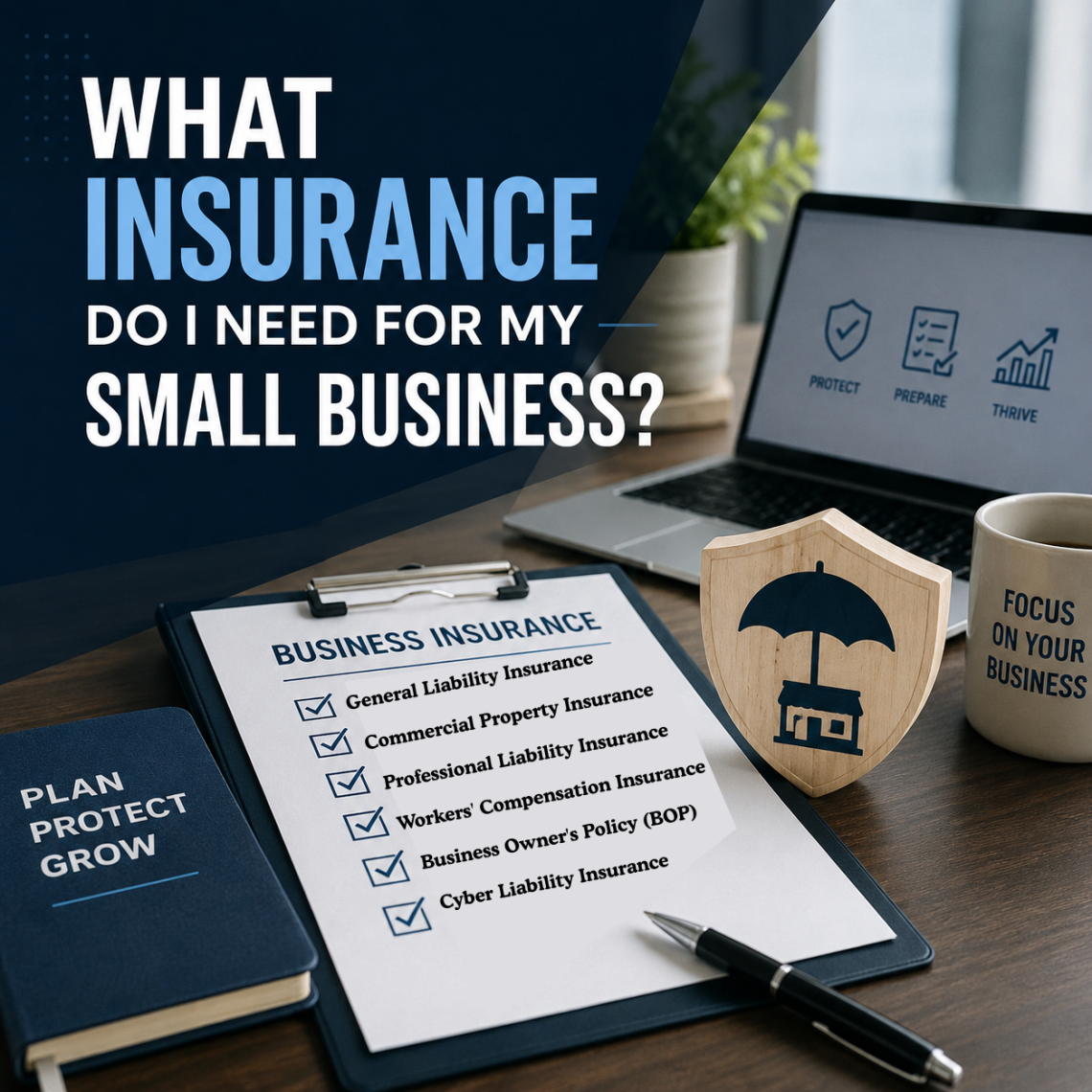
The basic question is not “Do I need insurance?” It is “What third-party risks can my business create, and which policy covers each one?” Commercial liability insurance is built to answer that question. General liability is the broad starting point. Professional liability covers advice or service mistakes. Product liability addresses harm caused by products you sell or distribute. Cyber liability can help when a privacy or network incident leads to claims. Umbrella or excess liability sits above other policies and can extend limits.
Honestly, I would not treat this as a do-it-yourself exercise if any of these apply: you sign contracts with indemnity clauses, you work under a landlord’s insurance requirements, you provide professional advice, you handle regulated data, you manufacture or import products, you use subcontractors, or a client has already demanded proof of insurance. In those situations, a broker, risk adviser, or attorney can help you test the policy language against the contract. The Insurance Information Institute says requirements like additional insured status can change what you actually need.
This is also not for someone trying to choose a policy based only on price. The lowest premium can be the wrong choice if it excludes the risk that is most likely to hit your business. Cheap can get expensive fast. A lower premium can also hide a high deductible, a narrow coverage grant, or a bad endorsement that weakens the policy.
The Step-by-Step Process for Commercial Liability Insurance for Small Businesses: What Coverage Do You Need? (Done Correctly)
-
List the third-party losses your business could cause.
Write down bodily injury, property damage, personal and advertising injury, professional errors, product harm, and data-related claims. Be specific: a client slipping in your entryway is different from bad design advice or a defective product. Check that each risk maps to a real policy type. If you cannot place a risk anywhere, that is a sign you need a broker or adviser. -
Check your contracts and lease terms line by line.
Pull every contract that mentions insurance, additional insured status, waiver of subrogation, hold harmless language, or minimum limits. Record the exact wording and any required endorsement. Make sure your proposed policy can satisfy those terms. A problem sign is when the contract requires endorsements your current carrier will not add. -
Identify which policy layer covers each exposure.
General liability usually handles bodily injury, property damage, and many personal injury claims. Professional liability handles negligent advice, errors, and omissions in services. Product liability often sits inside general liability or a separate form depending on the carrier and industry. Cyber liability addresses some privacy, network, and extortion-related claims, though policy forms vary widely. See that there is no gap between policy definitions. A problem sign is assuming one policy “covers everything.” -
Match the policy form to how you actually operate.
If you visit client sites, make sure the policy contemplates off-premises work. If you use independent contractors, check how subcontracted work is treated; a broker or lawyer can help interpret the endorsement language. If you sell online, confirm whether product liability extends to shipped goods and where the policy treats sales as taking place; the policy wording matters here. If you store client property, verify that the policy addresses care, custody, and control exclusions. A problem sign is a business model that changed but the policy stayed generic. -
Set limits based on the size of the claim you could plausibly face, not the premium alone.
Think in layers: per-occurrence limit, aggregate limit, and whether an umbrella policy may sit above the base policy. The per-occurrence limit is the most a policy pays for one claim; the aggregate is the most it pays over the policy term. See that those limits are large enough for your contracts and risk profile. A problem sign is a limit that meets a contract minimum but looks thin for your actual exposure. In the U.S., many small businesses start with limits in the $1 million per occurrence range, but your contracts may call for more. -
Review exclusions with care.
Read exclusions for professional services, employment practices, pollution, auto, assault and battery, abuse and molestation, fungi or mold, and contractual liability. Check whether any exclusion is softened by an endorsement. A problem sign is a business that relies on a policy exclusion being “unlikely to matter.” Exclusions matter most when they matter. -
Choose deductible or retention levels you can actually pay.
A deductible is the amount you pay before the insurer’s share begins under some liability forms; a self-insured retention is a similar concept often used in specialty policies. See that your cash flow can absorb that amount if a claim lands fast. A problem sign is a deductible so high that a claim becomes a financing problem. -
Confirm who is insured and who is not.
Make sure the named business entity is correct, and check whether owners, officers, employees, and volunteers are covered when acting within their duties. Verify that subsidiaries, DBAs, and locations are properly listed if needed. A problem sign is buying coverage under the wrong legal entity or leaving a side business outside the policy. -
Ask for the declarations page, specimen policy, and endorsement list before binding.
The declarations page summarizes the key limits and dates, but the endorsements often change the actual coverage. Check the final paperwork matches the quote and the contract requirements. A problem sign is any last-minute swap in exclusions, limits, or named insureds that nobody explains clearly.
Critical Checkpoints: What to Verify Before Moving Forward
I focus on four checkpoints before I would consider a liability program usable.
First, check the policy matches the business description. A consulting firm, a cleaning company, and a product seller can all be “small businesses,” but they do not share the same liability profile. If the class code or business description is vague, the insurer may have room to argue about what the policy was written for.
Second, check the trigger of coverage. General liability is commonly occurrence-based, meaning it responds to events that happen during the policy period, even if the claim comes later. Professional liability is often claims-made, which means the claim must be made during the policy period and the wrongful act may also have timing rules. If you do not know which trigger you have, you do not know when the coverage can fail.
Third, check additional insured status and certificates of insurance only as far as the policy language allows. A certificate is not the policy. It is evidence, not the contract itself. If your landlord or client wants to be added as an additional insured, the endorsement matters far more than the certificate wording.
Fourth, check how the policy treats defense costs. Some policies pay legal defense in addition to limits; others erode limits with defense costs. That difference can change the real value of the policy fast. I would ask the broker to show the exact policy language, and if the wording is unclear, I would consult a professional before binding.
For a reference point on policy and risk concepts, I trust plain-language materials from the U.S. Small Business Administration and the Insurance Information Institute, though local rules still control your own situation.
Warning Signs: When to Stop and Get Help
Your contract requires specific endorsements: the policy may need an additional insured endorsement, primary and noncontributory wording, or a waiver of subrogation — stop and have a broker or lawyer review the exact contract and endorsement language.
You provide advice, design, diagnosis, or other professional services: general liability may not cover mistakes in the service itself — get professional liability guidance before you assume one policy is enough.
You sell products, especially under your own label or through multiple channels: product liability and recall issues can follow you after the sale — ask for product-specific coverage terms.
You handle client data, payment data, or confidential records: privacy, network, and notification costs can create claims that general liability does not address — review cyber coverage separately.
You have prior claims, complaints, or a threatened lawsuit: the policy application may need exact disclosure, and some policies will not cover known issues — pause and disclose fully before applying.
Your business includes subcontractors, seasonal workers, or shared premises: coverage for those relationships can be messy — confirm who is insured, who is excluded, and how operations are classified.
The Most Common Mistakes (and Their Real Consequences)
One common mistake is buying only the minimum required by a landlord or client. The consequence is simple: the policy may satisfy the contract but still leave your own losses underinsured. The better alternative is to use the contract minimum as a floor, not a target.
Another mistake is assuming general liability covers professional mistakes. The consequence is a denial when the claim is about bad advice, missed deadlines, design errors, or service failures. The better alternative is to separate business liability from professional liability and check the policy trigger.
A third mistake is ignoring exclusions because the premium looks reasonable. The consequence is that the one risk you expected the policy to handle is carved out. The better alternative is to read the exclusions before you bind, not after a claim.
A fourth mistake is listing the wrong business entity or forgetting a DBA. The consequence can be a coverage dispute or a problem with a client contract. The better alternative is to match the named insured to the legal entity that actually owns the business operations.
A fifth mistake is treating a certificate of insurance as proof of full protection. The consequence is relying on a summary that can omit endorsements, exclusions, and limits. The better alternative is to review the declarations page and endorsements. If the contract is strict, ask a broker or lawyer to confirm the certificate is backed by the right endorsement.
A sixth mistake is setting a deductible you cannot pay from operating cash. The consequence is stress right when a claim needs attention. The better alternative is to choose a retention that fits your liquidity, not your optimism.
Edge Cases and Modified Approaches
Some businesses need a different setup than the standard general liability plus umbrella model.
If you are a consultant, accountant, designer, engineer, coach, or similar service provider, I would pay special attention to claims-made professional liability. The policy may need retroactive coverage, prior acts protection, and extended reporting options if you switch insurers or close the business. That matters because a claim can arrive months or years after the work was done.
For contractors, the policy may need completed operations coverage and clear treatment of subcontracted work. The risk does not end when the job site closes. I would check whether your contract also requires project-specific limits or a project aggregate.
If you manufacture, import, private-label, or resell products, standard general liability may not be enough in a practical sense. Product sourcing, warnings, traceability, and recall exposure can all matter. The policy wording around “your product” and “your work” becomes important.
If you rent space in a shared building, verify tenant improvements, fire legal liability, and any property you are contractually responsible for. A generic policy may not reflect the real loss if your lease shifts risk to you.
When your business operates internationally or serves clients across borders, policy territory, jurisdiction, and local insurance rules need attention. I would not assume a domestic policy follows your work everywhere.
If you are very new and still changing your model, I would review coverage more often than once a year. Early-stage businesses mutate. Insurance should keep up.
What to Expect: Realistic Timeline and Outcomes
A simple liability policy can sometimes be arranged quickly once the business description and basic risk picture are clear. A more complex setup takes longer because the insurer may ask about contracts, payroll, revenue mix, subcontractors, products, or prior claims. I would expect the process to slow down whenever the business is unusual, the limits are high, or the contract language is strict.
The realistic outcome is not “perfect coverage.” It is a policy program that matches your known risks reasonably well, with fewer blind spots and fewer surprises at claim time. You may still need to adjust later as the business changes. That is normal.
What you should walk away with is clarity on four things: which policy covers which loss, what the limits and deductibles are, which exclusions matter most, and what paperwork the insurer must issue to satisfy contracts. If those four pieces are not clear, the coverage is not clear.
FAQ
Do I need both general liability and professional liability?
Often, yes, if your business gives advice or provides services where mistakes can cause financial harm. General liability and professional liability cover different kinds of claims.
Is an umbrella policy the same as commercial liability insurance?
No. An umbrella usually sits above other liability policies and can add extra limits. It does not replace the base coverage.
Does a certificate of insurance prove I’m fully covered?
No. It only summarizes some policy information. The policy and endorsements control.
Can I rely on one policy for everything?
Usually not. Product risk, professional mistakes, cyber events, and auto exposure often need separate review.
When should I ask a professional instead of choosing on my own?
If contracts, professional services, product sales, data exposure, or past claims are involved, I would get qualified help before binding coverage.