Last updated: August 11, 2026
- A $1,000 mistake can start with the wrong guide.
- An industry guide groups risks by what the business does.
- Industry guides tell you what to insure .
- In each case, the industry shape of the work points you toward the coverages that deserve attention first.
A $1,000 mistake can start with the wrong guide. When you need industry and business-type coverage guides, this industry business-type coverage guides — complete guide asks a blunt question: which guide fits your business so you do not buy the wrong policy and find out after a claim. I write and edit insurance coverage content for business owners, and I would treat these guides as a buying map, not background reading. For an unusual situation, check with a licensed insurance professional and compare sources such as the U.S. Small Business Administration and the NAIC before you decide.
The trap is that “coverage guide” sounds broad. It is broad. Yet the decision is not. Usually, you are choosing between two paths:
- a guide built around your industry
- a guide built around your business type or entity structure
Not the same thing. A retail store, a contractor, a consultant, and a nonprofit can all face different risks even if they all call themselves “small business.” And a sole proprietor, LLC, partnership, and corporation can change how policies are written, who is covered, and what gaps matter most.
Here is my take: industry guides are the better starting point for risk discovery, while business-type guides are the better starting point for policy fit. Pick only one, and you can miss half the picture. The math stops working fast.
The Real Difference Between Industry Coverage Guides and Business-Type Coverage Guides
Industry coverage guides win when your main problem is “What can go wrong in my line of work?” Business-type guides win when your main problem is “How should this policy be structured for my company?” This is the cleanest way I know to separate them.
An industry guide groups risks by what the business does. A restaurant guide talks about spoilage, foodborne illness claims, liquor liability, and slips in a dining room. A contractor guide talks about job-site injury, tools, subcontractor risk, completed operations, and equipment theft. An e-commerce guide talks about shipping loss, cyber events, product liability, and returns. Specificity is the upside. The trade-off? It can flatten the legal structure of the business. Two restaurants may need very different endorsements depending on whether one is a single-owner LLC and the other is a franchise with multiple locations.
Start from structure, and you get a different kind of clarity. This matters because the legal form and operating setup affect exposure in ways many generic articles gloss over. A sole proprietor often needs to think harder about personal asset protection. A partnership needs to think about shared control and disputes. An LLC may need member-specific considerations. A corporation may need a different approach to officers, directors, and employment practices risk. Skip that, and the advice can sound right while missing who actually holds the risk.
The mistake I see most often is readers assuming one guide can replace the other. It cannot. Industry guides tell you what to insure. Business-type guides tell you how to hold the insurance. If you own a consulting LLC, I would begin with both: the consulting guide for professional liability and cyber, then the LLC guide for how those policies should align with your operating agreement and assets. That pairing is a little less tidy, but it is smarter.
Use this rule: industry first if you do not know your exposure; business type first when you already know the exposure and need the policy written correctly.
Industry Coverage Guides: Who Should Actually Use This (and Who Shouldn’t)
For owners who need plain business language instead of insurance jargon, industry coverage guides are the right tool. I would choose this path first when you are still asking, “What can happen in my business that could trigger a claim?” That is the right question for most new buyers.
They are especially useful for businesses with obvious operational hazards. A landscaper faces property damage, tool theft, vehicle exposure, and injury risk in customer yards. A manufacturer may face product defects, machinery hazards, and supply interruption problems. A medical practice has professional liability, records privacy, and regulatory concerns. A childcare provider has supervision issues and strict safeguarding expectations. In each case, the industry shape of the work points you toward the coverages that deserve attention first.
The strength of an industry guide is focus. It keeps you from buying generic business insurance just because the package sounds complete. A generic package can look fine on paper and still miss the real loss drivers in your field. I like industry guides because they force a hard question: what is the actual claim scenario? Once you answer that, coverage choices get easier.
But there is a catch. Industry guides can overgeneralize. Not every coffee shop is the same. A kiosk in a mall, a drive-through, and a multi-location café chain do not carry identical risk. The guide can make you think “restaurant” is the whole story when the real issue is your sales model, foot traffic, alcohol service, delivery work, or whether you use third-party apps. That gap can matter when you file a claim and the policy language is narrower than the article. Tiny detail, big headache.
I would not rely on an industry guide alone if your business has a complicated structure, multiple entities, mixed services, or unusual contracts. If you are a photographer who also sells prints, hosts workshops, and licenses content, the industry label is too simple. When you are a franchisee, the franchisor agreement may affect what you need more than your industry does. In those cases, an industry guide is a starting point, not a decision.
For reference and plain-language policy background, I trust sources such as the U.S. Small Business Administration and the National Association of Insurance Commissioners:
– U.S. Small Business Administration: https://www.sba.gov/business-guide/launch-your-business/get-business-insurance
– NAIC consumer insurance resources: https://content.naic.org/consumer.htm
Business-Type Coverage Guides: The Specific Situations Where It Wins
Business-type coverage guides win when structure drives the risk more than the line of work does. I would use this guide first when you already know your industry basics and now need to figure out what changes because you are a sole proprietor, partnership, LLC, corporation, or nonprofit.
This distinction matters more than many generic guides admit. A sole proprietor often has less separation between business and personal exposure, so the insurance conversation tends to be more urgent around liability limits and asset protection. A partnership needs a sharper look at who is responsible for what, how the partners are named on policies, and whether the business agreement lines up with the insurance paperwork. An LLC may need to think about member exclusions, named insureds, and whether the policy actually protects the entity the way the owner assumes. A corporation may have officer and director concerns that do not appear in a sole-prop guide at all.
This is where business-type guides shine: they help you avoid a false sense of coverage. I have seen too many owners assume “I formed an LLC, so I’m covered.” Formation helps with structure, not with every claim scenario. Likewise, a corporation does not erase liability from a bad contract, an employee dispute, or a cyber incident. The business-type guide forces the question that matters: who is legally exposed, and how should the policy be written to match that reality?
Still, there is a downside. Business-type guides can get abstract if you want a quick answer about day-to-day operations. A corporation in retail and a corporation in professional services may have very different coverage needs, even though the entity type is the same. So if you only read the business-type version, you may miss industry-specific coverages like product liability, food spoilage, garagekeepers coverage, or professional liability. That is the main failure mode.
I would skip a business-type guide as the only source if your business model is unusual, highly regulated, or contract-heavy. In those cases, structure matters, but the work you do matters more. If you are choosing one starting point for a legal-structure check, though, this is the better guide. If the structure question affects legal rights or a contract, consult a licensed professional and verify the policy against state guidance.
For policy and entity basics, I also look to the IRS business pages for structure context and to state insurance departments for policy interpretation, since state rules can affect coverage details. The IRS and state regulators are useful anchors when a guide feels too broad.
The Honest Side-by-Side
This is the part most generic articles avoid. They talk around the choice instead of making one. I won’t.
When you are deciding between an industry coverage guide and a business-type coverage guide, the right one depends on what is more likely to cause you to buy the wrong policy. For most owners, the bigger risk is missing a coverage that fits the work itself. For others, the bigger risk is buying the right coverage but setting it up under the wrong entity or assuming the wrong person is protected.
| Criteria | Industry Coverage Guides | Business-Type Coverage Guides | Winner for [condition] |
|---|---|---|---|
| Best starting point for new buyers | Shows likely claim scenarios in your field | Explains structure, but may feel abstract | Industry, when you need risk clarity fast |
| Helps with policy fit | Moderate, because it can miss entity details | Strong, because it aligns coverage to legal structure | Business type, when entity setup matters |
| Helps identify niche coverages | Strong in operationally distinct fields | Weak unless paired with industry context | Industry, for field-specific exposures |
| Useful for multi-location or mixed-service firms | Mixed; can oversimplify varied operations | Better at handling entity-level questions | Business type, for structure-heavy businesses |
| Clarity for sole proprietors | Good for work-related risk | Better for personal-vs-business separation | Business type, if asset protection is the concern |
| Clarity for regulated professions | Strong when industry rules drive claims | Secondary unless ownership structure is unusual | Industry, for regulated work |
| Risk of overgeneralization | Higher, because one industry can include many models | Also present, but usually narrower | Business type, for precision in structure |
| Best for contract review | Helps less with indemnity and entity wording | Helps more with named insureds and responsibility | Business type, when contracts control exposure |
| Best for first-time comparison shopping | Easier to understand quickly | Requires more insurance literacy | Industry, for plain-language research |
| Best combined use | Defines what can happen | Defines how the policy should be held | Both, if the business is complex |
The table tells the story. Industry guides are stronger at discovery. Business-type guides are stronger at alignment. Treating them as rivals is the wrong move; if legal or coverage questions are involved, consult a licensed professional and check the policy language. They are better understood as two checks on the same decision.
Our Verdict: Which One to Choose and Why
Choose industry coverage guides if you are early in the process, run an operational business, or do not yet know which losses are most likely. Choose business-type coverage guides if you already know the main risks and need to make sure the policy fits your legal structure, ownership setup, and exposure pattern. Neither works if you are trying to solve a highly specialized insurance issue without checking the actual policy wording or a licensed broker’s advice.
That is my clear recommendation, and I would not soften it.
For a solo consultant, I would start with the industry guide because professional liability, cyber, and contract risk are usually the first questions. Then I would use the business-type guide to make sure the policy names the correct insured and fits the way you operate. For a contractor with employees and vehicles, the industry guide is the better first read because the field creates the loss pattern. For a holding company or an owner with several entities, the business-type guide moves up because structure is where mistakes happen.
The biggest reason I land here is practical: most owners think they need a broad insurance overview when they really need a decision filter. Industry guides filter by risk. Business-type guides filter by structure. Choose the wrong filter first, and you will still end up overbuying one thing and underbuying another.
I also think the order matters. Start with the industry guide when your business is simple but the work is risky. Start with the business-type guide when your work is simple but your legal setup is complicated. If both are true, read both before you buy anything.
When to Reconsider This Choice Entirely
Sometimes the real answer is not “which guide,” but “this guide alone is not enough.” I would reconsider the whole choice when any of these are true.
-
You have unusual contracts. When your client agreement, lease, franchise agreement, or vendor contract dictates insurance terms, the policy language matters more than the guide. The guide helps, but it does not settle the issue.
-
You sell products that can cause downstream harm. A business may look simple on the surface and still face product liability, recall exposure, or distribution issues. That risk is often better understood through product and supply-chain questions than through a generic industry summary.
-
You operate across several models. A business can be part service firm, part retailer, part online seller, and part training provider. In that case, a single industry label will mislead you.
-
You are relying on the guide as a substitute for policy review. That is the most common mistake. A guide can tell you what to ask, not what every exclusion means. If the policy wording is the real issue, stop reading summaries and inspect the contract.
If one of those applies, I would treat the guide as a map, not the destination. That is where a lot of bad decisions start: an owner reads a clean overview and assumes the policy will behave the same way. It often does not. When the contract, entity, or exclusion question affects a claim, consult a licensed professional and verify the wording against authoritative sources.
For business owners who want a more formal framework, the Insurance Information Institute and state insurance departments are useful for consumer-level insurance education. For entity-related questions, the SBA and IRS remain better anchors than random blog posts. The SBA’s business insurance page is a practical starting point, and state department guidance can show how rules differ by location.
What Generic Coverage Articles Get Wrong
Most generic articles make the same three mistakes. First, they treat all businesses as if the same coverages matter equally. Second, they ignore how the business is owned. Third, they make the reader think the summary is enough.
That is not enough. It never was.
The best coverage guide is not the one with the most insurance terms. It is the one that helps you answer four questions in order:
- What do I actually do?
- What can go wrong because of that work?
- Who legally holds the risk?
- Which policy details matter enough to verify before I buy?
If an article does not help with those, it is probably traffic, not guidance. Straightforward? Sure. Useful? Not always.
I also think generic articles underestimate how often business owners need to compare sources. A coverage guide should point you toward authoritative references, not replace them. State insurance departments, the SBA, the NAIC, the IRS, and industry associations exist for a reason. They keep the basics anchored in reality, while the guide helps translate that reality into a buying decision.
Practical Checklist Before You Buy
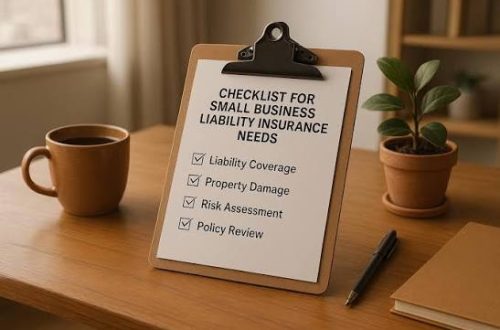
Before you choose any policy based on a guide, I would run this checklist.
- Write down your actual business model in one sentence.
- List the top five ways your business could lose money fast.
- Separate operational risk from ownership/structure risk.
- Check whether your contracts require specific limits or wording.
- Confirm who is named on the policy.
- Ask what is excluded, not just what is included.
- Verify whether the guide is industry-based, business-type-based, or both.
- If the business is regulated, confirm the guide reflects that regulation.
This is the part where a reader can save real money by avoiding a wrong fit. Not by chasing the lowest premium, and not by assuming every packaged policy is broad enough. Match the guide to the problem. That is the move.
FAQ
What is the difference between an industry coverage guide and a business-type coverage guide?
An industry guide focuses on the risks tied to what the business does. A business-type guide focuses on how the business is owned and structured. Industry tells you what can happen; business type tells you how the coverage should be set up.
Which should I read first?
Read the industry guide first if you do not yet know your main exposure. Read the business-type guide first when your legal structure, ownership setup, or contracts are the main concern.
Can one guide replace the other?
No. A strong industry guide can miss entity-level issues. A strong business-type guide can miss job-specific risks. For many businesses, the best answer is to use both.
Are these guides enough to buy insurance on their own?
No. They are a starting point. Before buying, review the actual policy wording, exclusions, endorsements, and contract requirements. If the coverage affects legal, tax, or regulated matters, talk with a licensed professional.
What is the biggest mistake business owners make with coverage guides?
They read a general guide and assume it applies cleanly to their exact business. That is how people miss exclusions, named-insured problems, and industry-specific coverages.
Bottom Line
If you want the shortest honest answer, here it is: industry coverage guides are best for finding the right risks; business-type coverage guides are best for fitting the policy to the business. Use the one that solves your biggest unknown first, then use the other to catch what the first one missed. That is the cleanest path to buying insurance that actually